


What 4WD Tyre Pressure Should I Run on Sand, Beach and Gravel?
Getting your tyre pressure right is the single biggest thing you can do to make a 4WD trip safer and easier, and most drivers run too high once they leave the bitumen. Whether you’re heading to Lancelin and Wedge Island for the weekend, down to the Yeagarup dunes near Pemberton, or north to the corrugations of the Gibb River Road, dropping your pressure to suit the surface improves traction, protects your tyres and gives everyone in the car a far more comfortable ride.
There’s no single right number. The best pressure depends on your vehicle, tyre size and construction, load, driving style and the conditions on the day, so this guide gives ranges rather than exact figures. It covers each surface in PSI and kPa, how to let your tyres down and pump them back up safely, and what to check before and after the trip.
Quick answer: As a guide for light truck (LT) tyres, run 32 to 38 PSI (220 to 260 kPa) on bitumen or your placard pressure, 28 to 32 PSI (195 to 220 kPa) on fast, smooth gravel, 24 to 28 PSI (165 to 195 kPa) on slow, rough gravel and corrugations, and 18 to 26 PSI (125 to 180 kPa) on sand, with 20 PSI a sensible minimum for most drivers. Adjust for your vehicle, load and conditions, slow down whenever your pressures are low, and reinflate before you return to sealed roads.
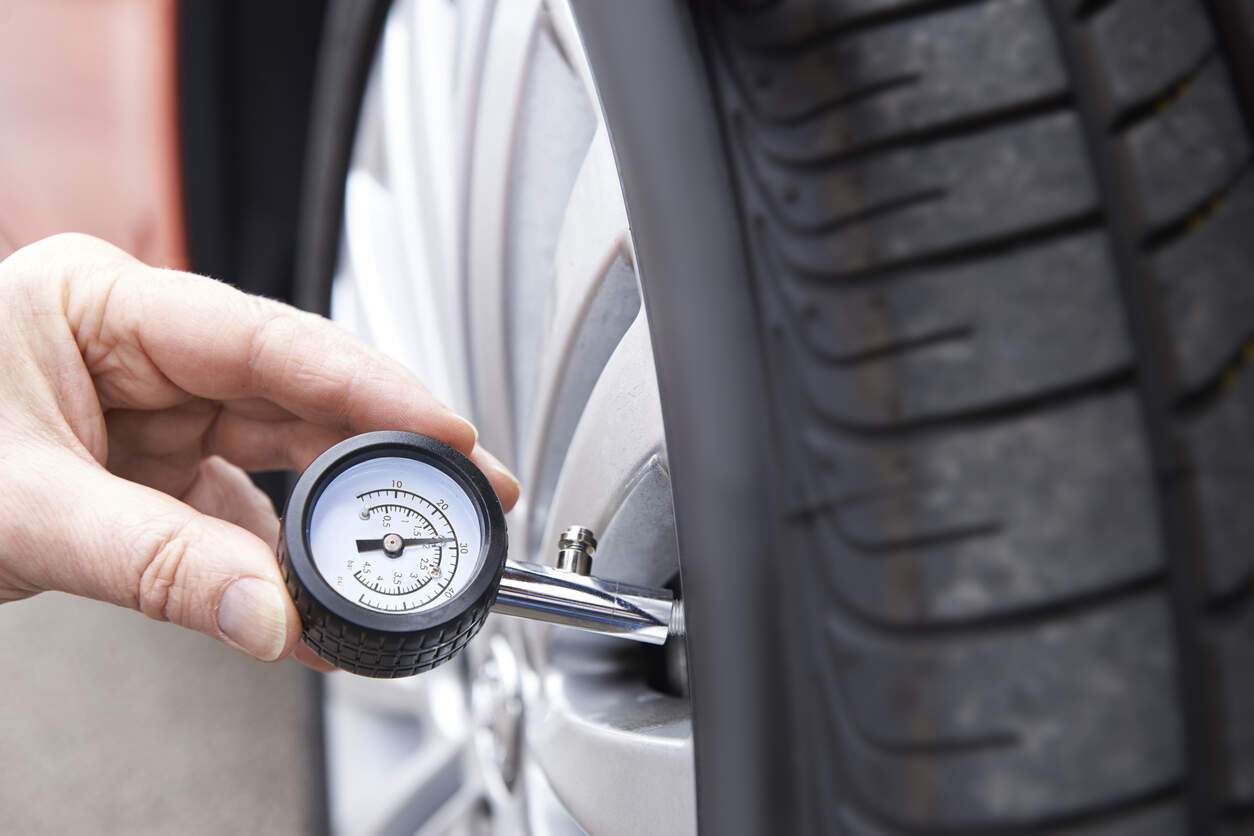
4WD tyre pressure chart: sand, beach, gravel and more
These ranges are a starting guide for most 4WD wagons and utes on light truck (LT) construction tyres. A heavily loaded vehicle, or one towing a camper or caravan, should sit at the higher end of each off-road range. On bitumen, always use your tyre placard pressure for your load, which may be above 38 PSI.
| Surface | PSI | kPa | Notes |
|---|---|---|---|
| Sealed bitumen (highway) | 32 to 38 | 220 to 260 | Follow your tyre placard for your load |
| Fast, smooth gravel | 28 to 32 | 195 to 220 | Well-graded gravel roads at moderate speed |
| Slow, rough gravel and corrugations | 24 to 28 | 165 to 195 | Lower speeds; lets the tyre flex over corrugations |
| Sand and beach | 18 to 26 | 125 to 180 | Firm sand near the waterline suits the upper end; soft, dry sand and dunes the lower end. 20 PSI is a sensible minimum for most drivers |
| Mud | 22 to 28 | 150 to 195 | You may not need to lower your pressure at all; avoid sharp steering or throttle at low pressures |
| Rock | 20 to 26 | 140 to 180 | Lets the tyre flex over rocks; drive slowly and pick lines that keep sidewalls off sharp edges |
kPa values are converted from PSI and rounded to the nearest 5.
These figures are a guide only. They’re based on light truck (LT) construction tyres. Passenger-construction tyres, fitted as standard to many SUVs and some utes, have lighter sidewalls and generally shouldn’t be run this low, so check with us before you air down. The right pressure for your tyre size, load and trip can vary, and we’re happy to work it out with you.
Your vehicle’s tyre placard, usually on the driver’s door pillar, lists the recommended road pressure in kPa for your standard tyres and load. Treat it as your baseline and work down from there. You’ll find more on road pressures in our tyre pressure guide.
Heading to Lancelin or up the coast these holidays? Book a complimentary pre-trip tyre check with Bryn and the Tyrepower West Perth team before you go, and we’ll recommend the right pressures for your tyres and load.
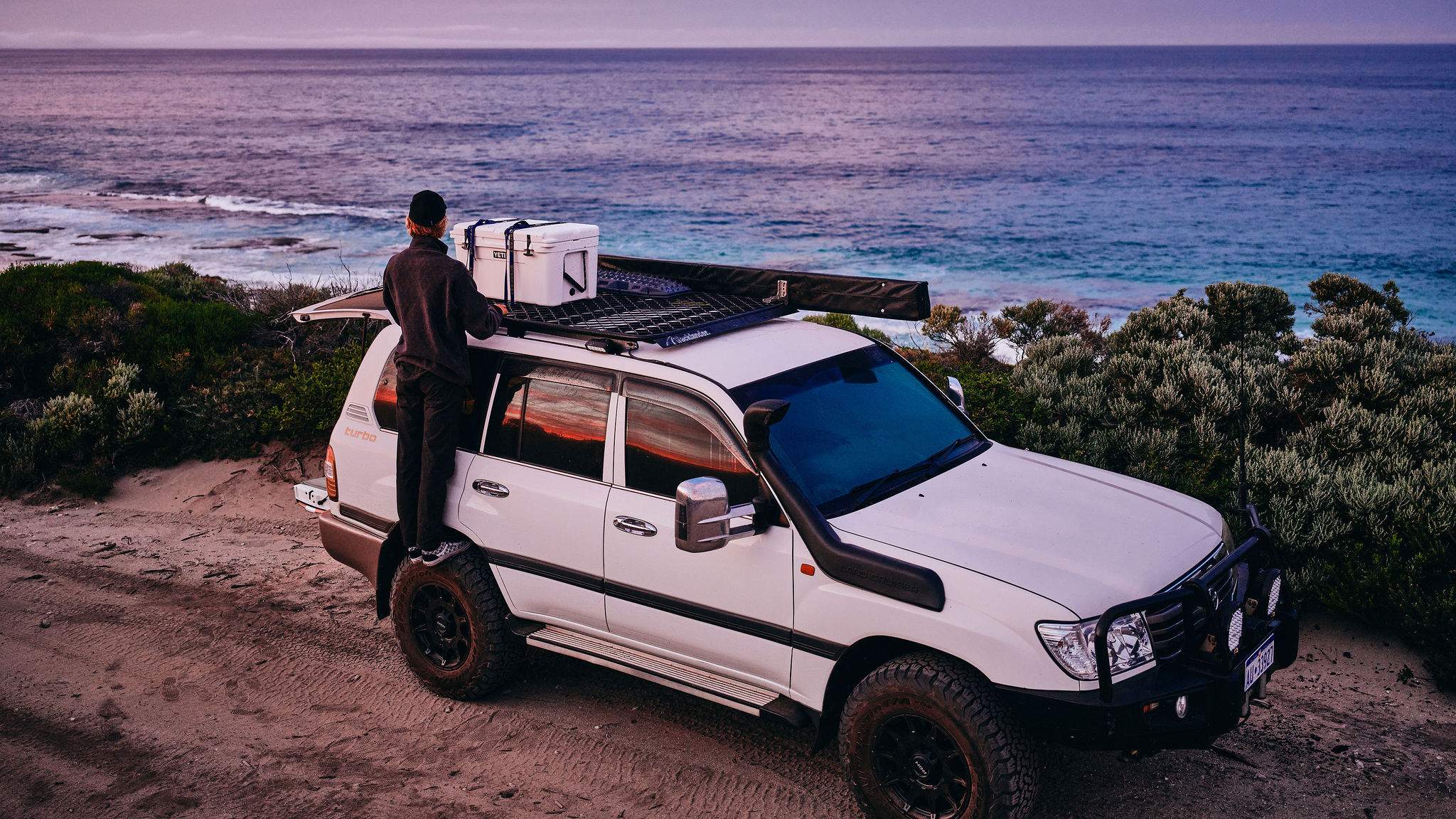
Why should I lower my tyre pressure off-road?
Lowering your tyre pressure lengthens the tyre’s footprint, spreading the vehicle’s weight over more surface so it floats over sand instead of digging in. On gravel and corrugations, a softer tyre flexes over the bumps rather than hammering through them, which is easier on the tyre, the suspension and everyone inside.
The trade-off is speed, heat and load. A tyre run soft flexes more and builds heat, its load-carrying capacity drops as the pressure drops, and at highway speed it can overheat or roll off the rim on a turn. Lower pressures and lower speeds always go together.
What tyre pressure for beach and sand driving in WA?
For sand, 18 to 26 PSI (125 to 180 kPa) is a good guide for most 4WDs on LT tyres. Firm, damp sand near the waterline usually suits the upper end of the range, while soft, dry sand in summer and steep dune climbs need the lower end. Start higher and come down in small steps only if you’re struggling for traction.
Popular beach driving areas within a few hours of Perth include Lancelin, Wedge Island, Ledge Point, Moore River and Preston Beach, with the Yeagarup dunes in D’Entrecasteaux National Park further south. Each has its own access rules and conditions, so check the Code Off Road from Parks and Wildlife (DBCA) and local signage before you go. Some entry points also post a recommended starting pressure.
The golden rule: 20 PSI (140 kPa) is generally an acceptable minimum. At 18 PSI and below, the risk of a tyre coming off the bead rises sharply, especially on a turn. And always reinflate before you get back on the bitumen.
“After a beach weekend, the damage we see most is sidewall damage from running too soft. Sometimes the tyres weren’t pumped back up before the drive home on the highway, and sometimes a tyre has been pushed off the bead on the beach. We also see rock damage to tyres, which can often be avoided with the right pressure for the conditions.”
What tyre pressure for gravel and corrugated roads?
For gravel, the right pressure depends on how fast and how rough it is. Fast, smooth, well-graded gravel suits around 28 to 32 PSI (195 to 220 kPa), while slow, rough gravel and heavy corrugations suit around 24 to 28 PSI (165 to 195 kPa), with your speed dropping to match. That applies to everything from shire gravel roads in the South West to long outback runs like the Gibb River Road.
A slightly softer tyre absorbs the constant vibration that shakes fittings loose, gives a more forgiving ride over long distances, and is less likely to be damaged by sharp stones than a rock-hard tyre. Corrugations are also tough on wheel alignment, so it’s worth having it checked when you get home. See our wheel alignment service.
How fast can I drive on lower tyre pressures?
Slow down whenever your pressures are low. The lower the pressure, the lower your speed should be, so go slowly on sand, well below the limit on gravel, and slower again on corrugations. Drive to the conditions rather than the speed limit, avoid sharp turns and sudden braking on soft tyres, and stop to reinflate before any stretch of sealed road.
What gear do I need to let my tyres down and pump them back up?
You need three things: a tyre deflator to drop pressures quickly and evenly at the track, an accurate gauge, and a 12-volt compressor to air back up before you hit the highway. Guessing pressures, or driving back to town on soft tyres to find an air hose, is one of the most common ways to ruin a set of tyres. These tools are the cheapest insurance in off-road driving.
Set your pressures with the tyres cold where you can. A light truck or 4x4 tyre that has just been driven on reads about 6 PSI higher than when cold, so if you’re airing up straight after a beach run, allow for that and recheck once the tyres have cooled.
Our experienced team are here to help you get track-ready. Drop by and see us for a complimentary pre-trip tyre check before summer.
Driving tips once you’ve aired down
The right pressure does most of the work, but how you drive matters too:
- Keep your momentum. Smooth, steady throttle keeps you on top of soft sand. Stopping on an incline or in deep, soft sand is the easiest way to get stuck.
- Steer gently and brake gradually. Sudden inputs on soft tyres can dig the vehicle in or pull a tyre off the bead.
- Rest the vehicle on long sand runs. Soft sand builds heat in your tyres and drivetrain, so stop and let things cool down.
- Follow existing tracks where it’s safe to, and stick to firm sand near the waterline around low tide.
- If you get bogged, stop. Spinning the wheels only digs you deeper. Clear the sand from in front of the tyres, drop your pressure a little further if it’s safe to, and reverse out gently along your own tracks.
- Carry recovery gear (a shovel, recovery boards and a rated snatch strap) and travel with another vehicle on remote beaches.
Do LT tyres and load rating matter for sand and touring?
Yes. Light truck (LT) tyres have a stronger construction and tougher sidewalls than passenger tyres, which makes them far more tolerant of low pressures, sharp rocks and heavy loads. The pressure ranges in this guide are for LT tyres. If your 4WD came on passenger-construction tyres and you regularly tour, tow or run low pressures, an LT tyre is worth considering at your next replacement.
Load rating matters too. The load index on your tyre must suit your vehicle’s fully loaded weight, including roof racks, drawers, water, fuel and a camper’s towball weight, and remember that a tyre’s load capacity drops as its pressure drops. If you’re not sure, we can check it against your setup. Browse common 4WD sizes such as 265/65R17, 265/70R17, 265/65R18, 265/60R18 and the increasingly popular 275/65R18.
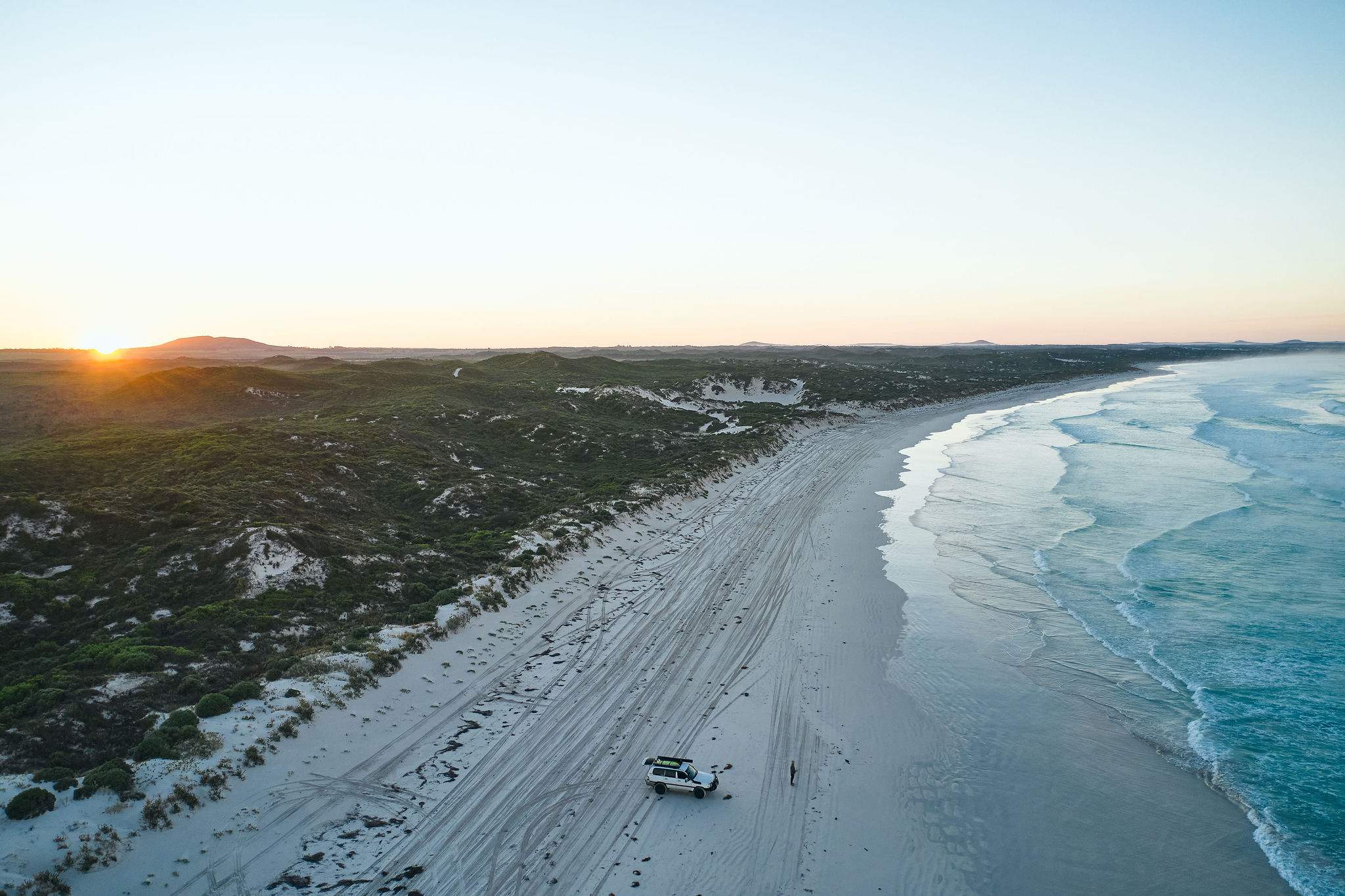
Which tyres suit WA beach and touring driving?
For most WA touring, from weekend beach runs to school holiday trips down south or up the coast, a quality all-terrain (AT) tyre such as the BFGoodrich All-Terrain T/A KO3 is the right call. Mud-terrain tyres only make sense if you spend most of your time in genuine mud and rock, as they’re noisier and wear faster on the highway. For a full comparison, read all-terrain, highway-terrain and mud-terrain tyres compared, and see our off-road wheel and tyre packages.
What should I check after a beach or gravel trip?
- Reinflate to your placard pressure and recheck once the tyres are cold.
- Rinse salt and sand from the wheels, brakes and underbody as soon as you can.
- Look for cuts, bulges or embedded stones in the tread and sidewalls, including the spare.
- If you repaired a puncture on the track with a string plug, have it looked at properly. A string plug is a temporary fix, not a permanent repair.
- If you’ve done long stretches of corrugations, book a wheel alignment check.
If anything looks or feels different, bring it in and we’ll take a look.
Frequently asked questions
Can I damage my tyres by running them too low?
Yes. Running too low overheats the tyre, reduces how much load it can carry, and can push it off the bead, and hitting an obstacle on a very soft tyre can pinch and split the sidewall. Around 20 PSI is generally an acceptable minimum on sand. Lower pressures are safe only at low speeds, and you should always reinflate before returning to sealed roads.
Why is my tyre pressure warning light on after letting my tyres down?
Your tyre pressure monitoring system (TPMS) is doing its job: you’ve dropped the pressure below the level it’s set to warn at. The light should clear once you reinflate, although some vehicles need a short drive or a reset. If it stays on after you’ve reinflated correctly, have it checked. Our guide to what your TPMS light really means explains more.
Can I take my AWD SUV on the beach?
Some can, on firm sand in good conditions, but most AWD SUVs have less ground clearance, road-focused passenger tyres and no low-range gearbox, so they bog more easily and are harder to recover. Check your owner’s manual and your insurance first, as some manufacturers and policies exclude beach driving. Because passenger tyres shouldn’t be run as low as LT tyres, talk to us about safe pressures before you go, stay on firm sand near the waterline around low tide, and never go alone.
How do I reset my tyre pressures after a trip?
Reinflate to your placard pressure with a 12-volt compressor before you drive home on the highway, then recheck once the tyres are cold. It’s also worth having the tyres inspected, because sand, salt and sharp gravel all take their toll.
Should I check my 4WD tyres before a big trip?
Yes. Before any serious trip, check tread depth, sidewalls, tyre age and your spare, and make sure your load rating suits a fully loaded vehicle. A complimentary pre-trip check is far easier than a tyre failure on a remote track.
Book a complimentary tyre check before your next trip
Planning a trip down south or up the coast? Bring your 4WD in for a complimentary check to make sure you’re ready for the track. We’ll look at tread depth, sidewalls, tyre age, load rating and your spare, and recommend the right tyre and pressures for your vehicle, load and where you’re actually driving.
Bryn Sawford has more than 30 years in the tyre trade, and Tyrepower West Perth is rated 4.9 stars across more than 300 Google reviews by Perth drivers. Visit us at 35 Troode Street, West Perth, call (08) 9322 2214, email westperth@tyrepower.com.au, or book your complimentary check online. Open Monday to Friday 8am to 5pm and Saturday 8am to 12pm.